
TNT Fund I
This deck is confidential. Enter the access code to continue.
This deck is confidential. Enter the access code to continue.
We back the best founders at MIT and Harvard early,
help them build, and double down when they break out.
Confidential - For Qualified Investors Only
Disclaimers
This presentation (this "Presentation") has been prepared solely for, and is being delivered on a confidential basis to, a limited number of sophisticated prospective investors considering an investment in TNT Fund I, LP, a private investment vehicle (the "Fund") to be formed in the future, as described herein. This Presentation does not constitute an offer to sell or a solicitation of an offer to purchase limited partnership interests (the "Interests") in the Fund. Any such offer or solicitation will only be made pursuant to the Limited Partnership Agreement and Subscription Agreement of the Fund, each as amended and/or supplemented from time to time (the "Offering Documents"), which qualifies in its entirety the information set forth herein. Actual terms, and other important information which prospective investors should consider before making a decision to invest in the Fund, will be contained in the Offering Documents.
This Presentation contains confidential, proprietary, trade secret and other commercially sensitive information. Any reproduction or distribution of this Presentation, in whole or in part, or the disclosure of its contents, without the prior written consent of TNT Capital Partners, LLC (the "Manager"), which will serve as the Fund's investment manager, is prohibited and all recipients agree they will keep confidential all information contained herein and not already in the public domain and will use this Presentation for the sole purpose of evaluating a possible investment in the Fund. By accepting this Presentation, each prospective investor agrees to the foregoing.
The Interests will not be approved or disapproved by any securities regulatory authority of any state or by the Securities and Exchange Commission or by any securities regulatory authority in any other jurisdiction, nor will any such authority or commission pass on the accuracy or adequacy of this Presentation. Any representation to the contrary is a criminal offense. The Interests will not be registered under the U.S. Securities Act of 1933, as amended (the "Securities Act"), the securities laws of any other state or the securities laws of any other jurisdiction, nor is such registration contemplated. The Interests will be offered and sold in the United States under the exemption provided by Section 4(a)(2) of the Securities Act and/or Regulation D promulgated thereunder and other exemptions of similar import in the laws of the states and jurisdictions where the Fund's offering will be made.
Prospective investors should make their own investigation of the investment described herein, including the merits and risks involved and the legality and tax consequences of such an investment. Prospective investors should not construe the contents of this Presentation as legal, tax, investment or accounting advice. Each prospective investor should make its own inquiries and consult its advisors as to an investment in the Fund and as to legal, tax, regulatory, financial, accounting and related matters concerning an investment in the Fund.
Overview
Fund I Overview
TNT runs the largest founder community at MIT and Harvard. Fund I backs the best builders with $150K MFN at pre-seed and exercises a 2% right at Series A on the breakouts. LPs get SPV co-invest priority and access to the founder community we’ve built across both campuses.
The Market
The best venture returns come from the best founders. MIT and Harvard produce a disproportionate share.
Unicorn Founders by University
A Sample of Their Alumni-Founded Unicorns






Source: Strebulaev, Stanford Venture Capital Initiative (cumulative US-VC-backed unicorn founders by university).
The Problem
There are five reasons most MIT and Harvard students never start a company. We built TNT to solve each one.
Big tech, consulting, and finance are the defaults at both schools. Founding doesn’t get the same airtime as on-campus recruiting.
Sandbox, Trust Center, i-Lab, Harvard Grid, Rock Center, Deshpande, and the clubs all exist. They’re visible only if you already knew to look.
Sandbox and similar programs require applications, long cycles, and painful reimbursement and approval processes for any spending. Most founders can’t wait through them, and most don’t get in.
Credits, mentor matches, legal templates, and GTM intros all exist somewhere across the schools and clubs. Founders waste weeks hunting for what they need instead of building.
PhDs in the labs and builders in their dorm rooms never connect. HBS MBAs two miles away are invisible. Matching events skew to MBAs while the technical founders stay heads down.
TNT closes all five layers. Firesides with top founders show students what’s possible. One front door for $150K capital at admission, $1M+ in cloud credits, dedicated mentorship, and legal counsel through Orrick. Curated cross-school co-founder matching and a community to connect and build with. 2% allocation at Series A.
Why TNT
TNT is a professionally run organization embedded across MIT and Harvard, dedicated to finding, funding, and supporting the best founders on both campuses, often before they have a company.
We work with the student clubs, faculty, and centers across MIT and Harvard. Our fellows are leaders of the most important clubs at both schools. We have relationships with CSAIL, the Trust Center, i-Lab, Rock Center, and the Harvard Grid.
Delta v supports MIT founders. i-Lab supports Harvard founders. TNT is the bridge across both, where a CSAIL PhD meets an HBS MBA.
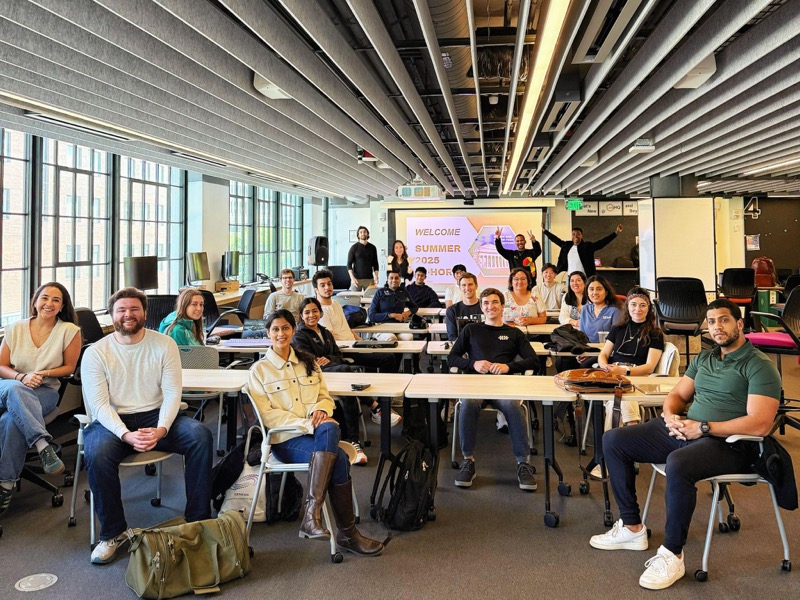
Our fellows are student entrepreneurs running the programming on both campuses, surfacing founders, and keeping the flywheel turning. They are builders themselves rather than scouts looking for resume credentials. TNT persists as a company that compounds across cohorts, with the institutional memory and standards that come with that.
School programs mention TNT, but founders sell it. The newsletter has grown to 2,400+ subscribers organically, and most cohort applicants come through founder-to-founder word of mouth.
By the time founders are ready to raise, we've known them for nine to twelve months through community events, hackathons, and mentor sessions. TNT is typically the first investor they call.
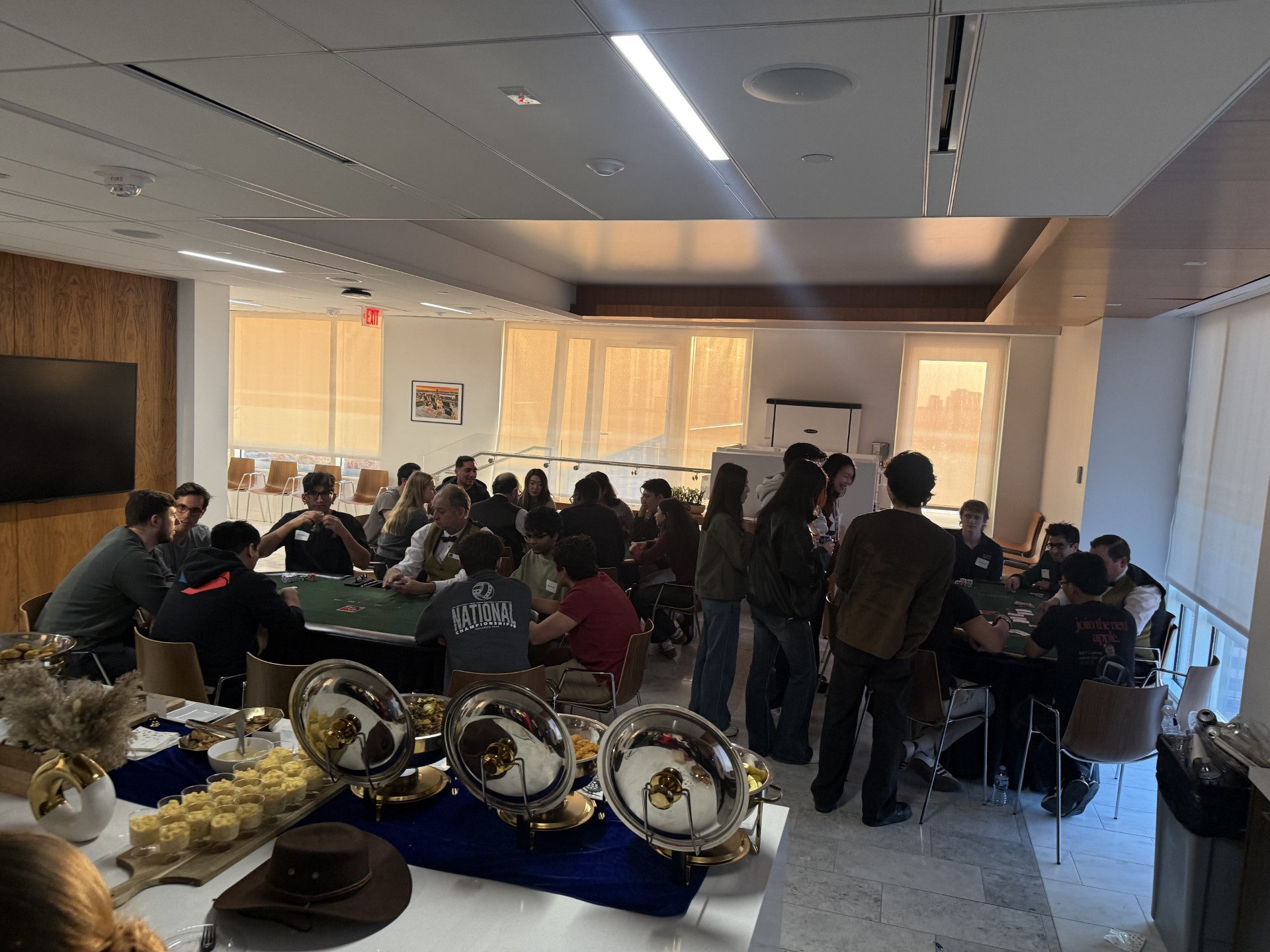
The Sourcing Engine
TNT sources through community presence rather than scouts or cold outreach. Each layer of programming surfaces and develops founders, and the best rise into the accelerator.
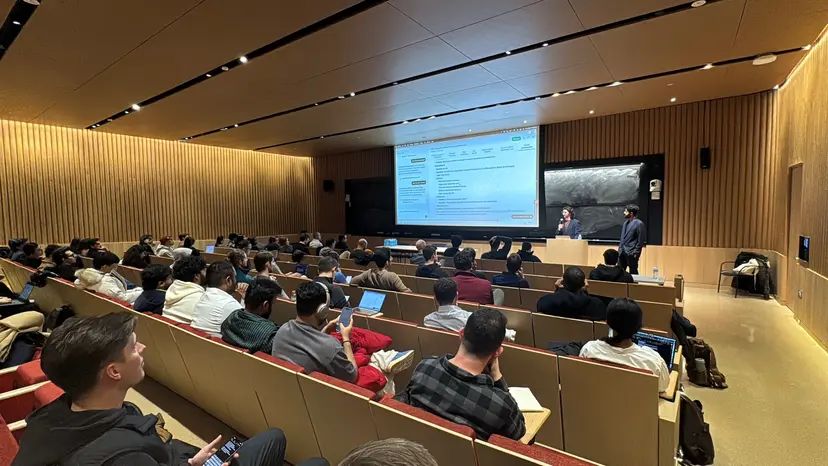
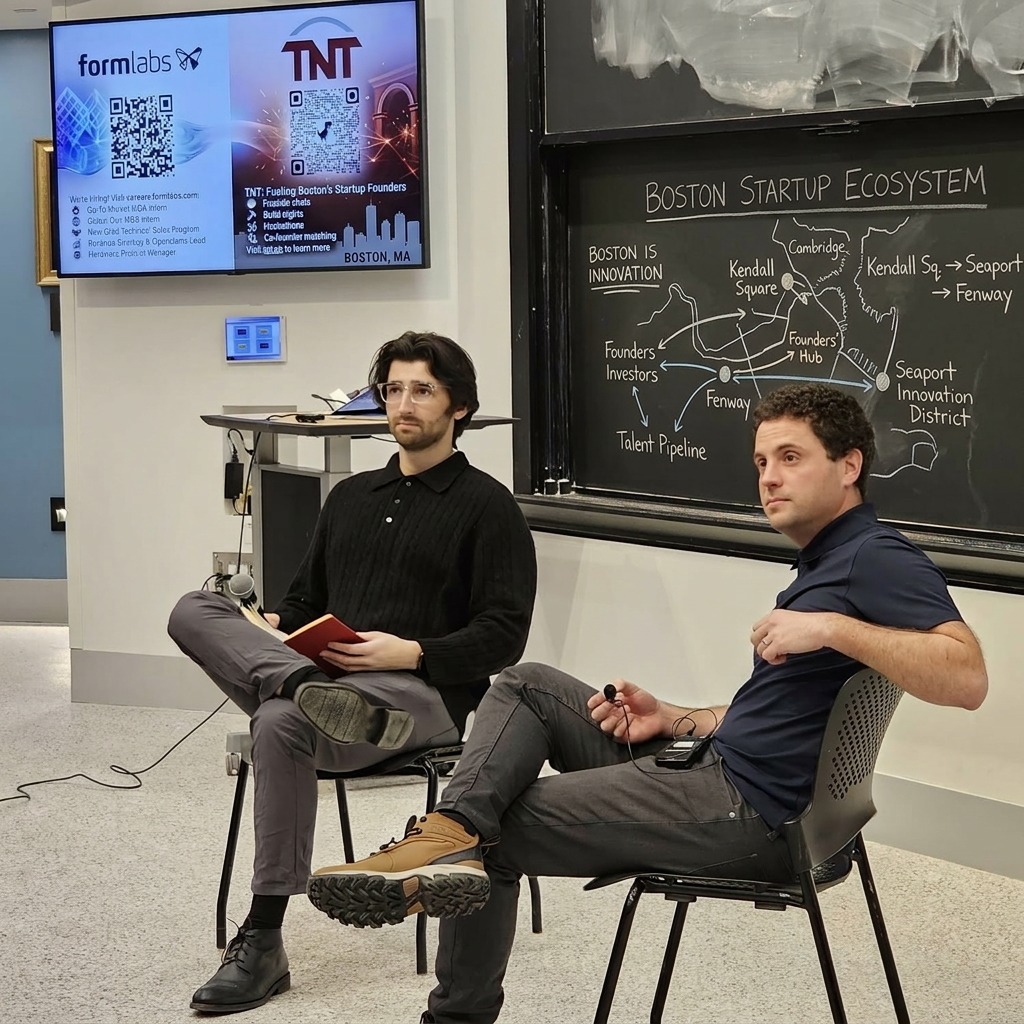
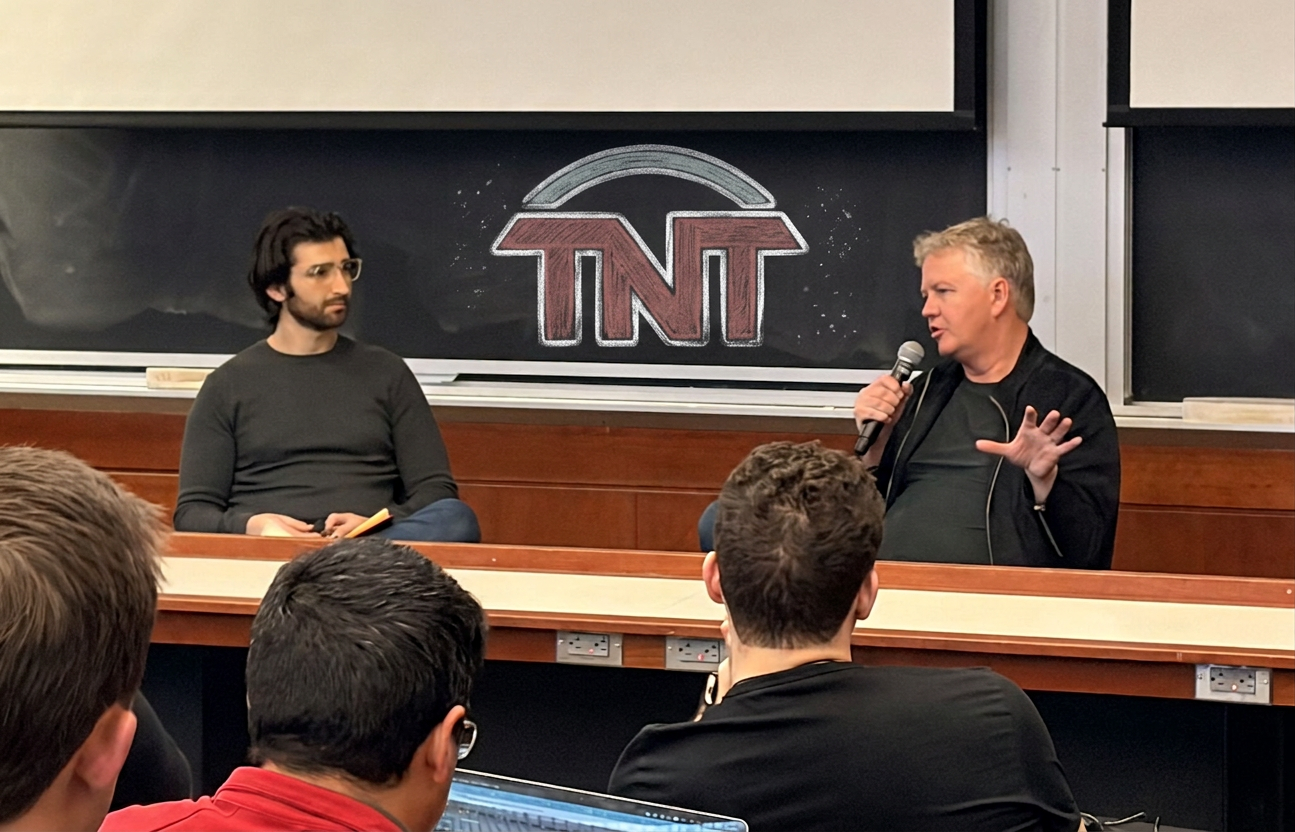
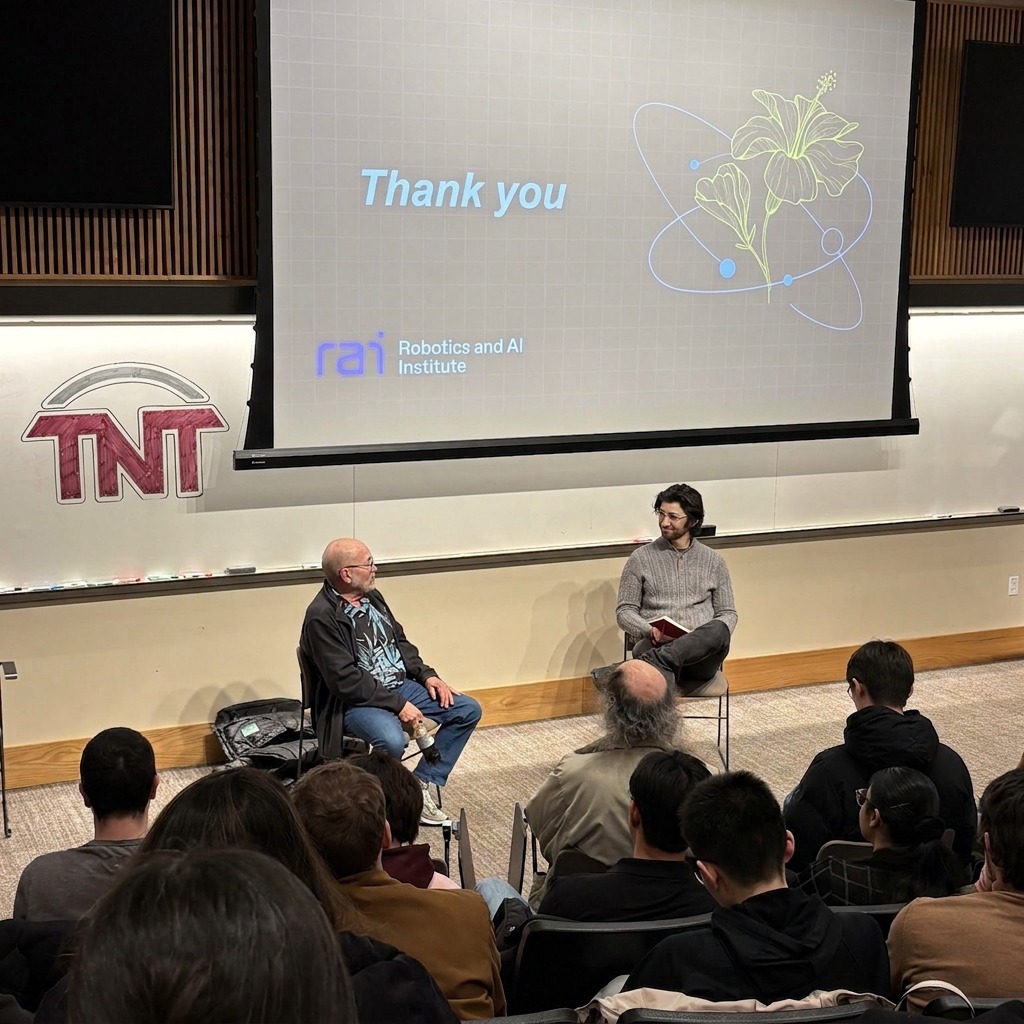
Firesides with the founders of Cloudflare, Boston Dynamics, Formlabs, Ginkgo, Liquid AI, and more. Students see what's possible.
We pair technical and business founders across MIT and Harvard. PhDs meet MBAs. Engineers meet operators. The cross-campus bridge.
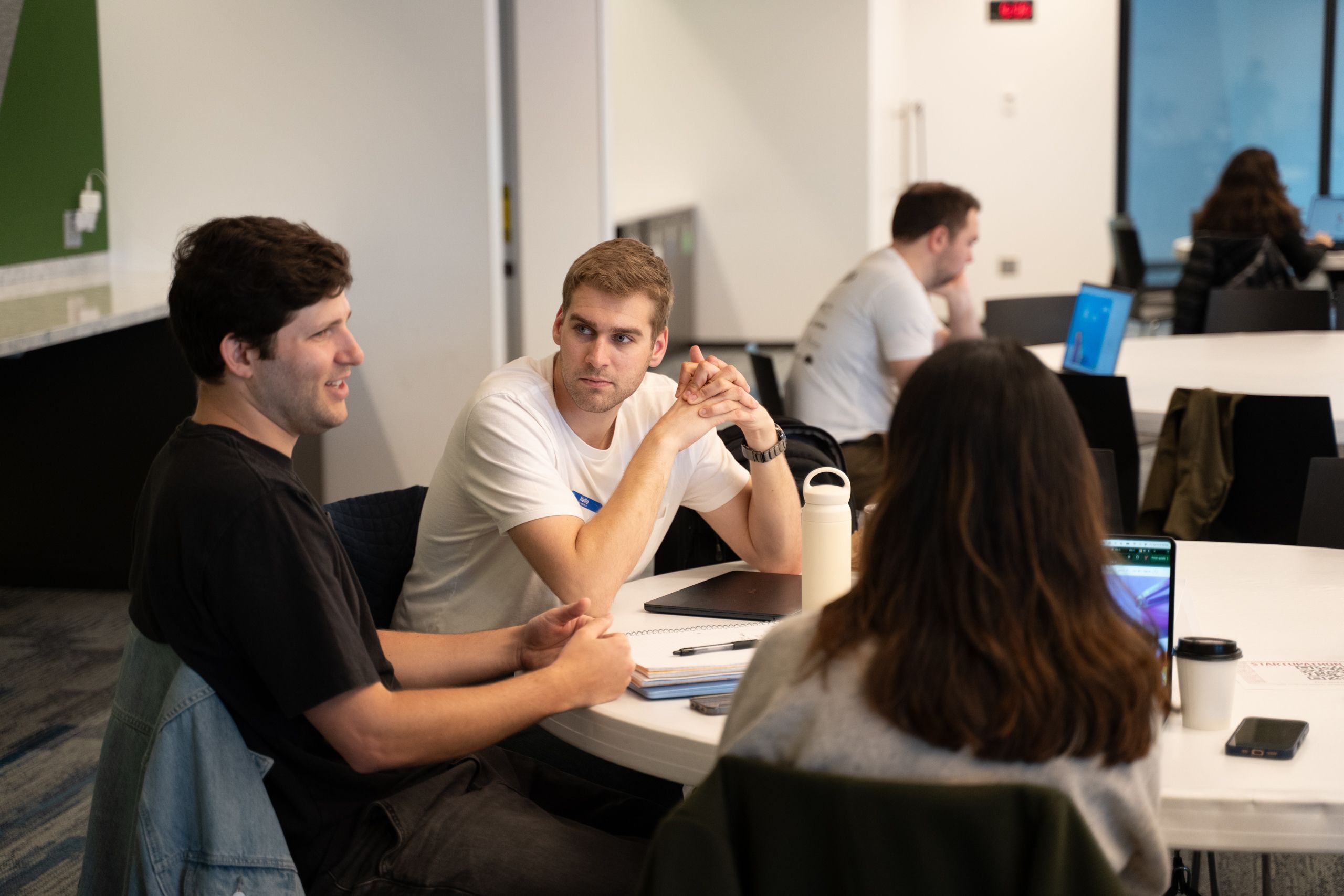
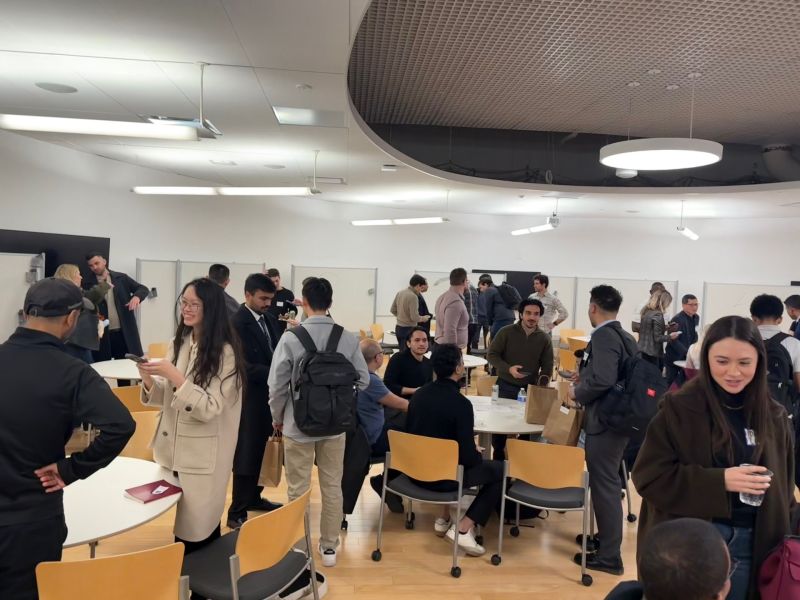
Community nights and hackathons where founders work side by side, form teams, and ship. We see who's serious and who has momentum.
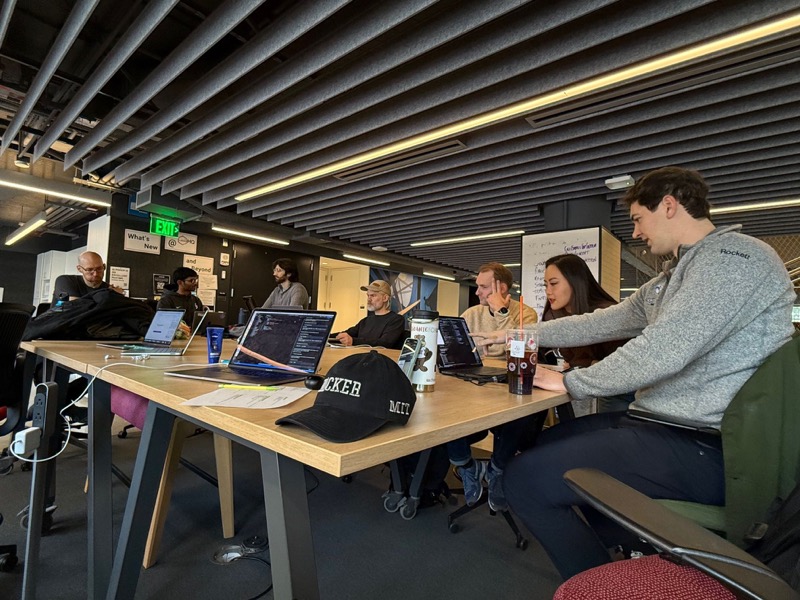
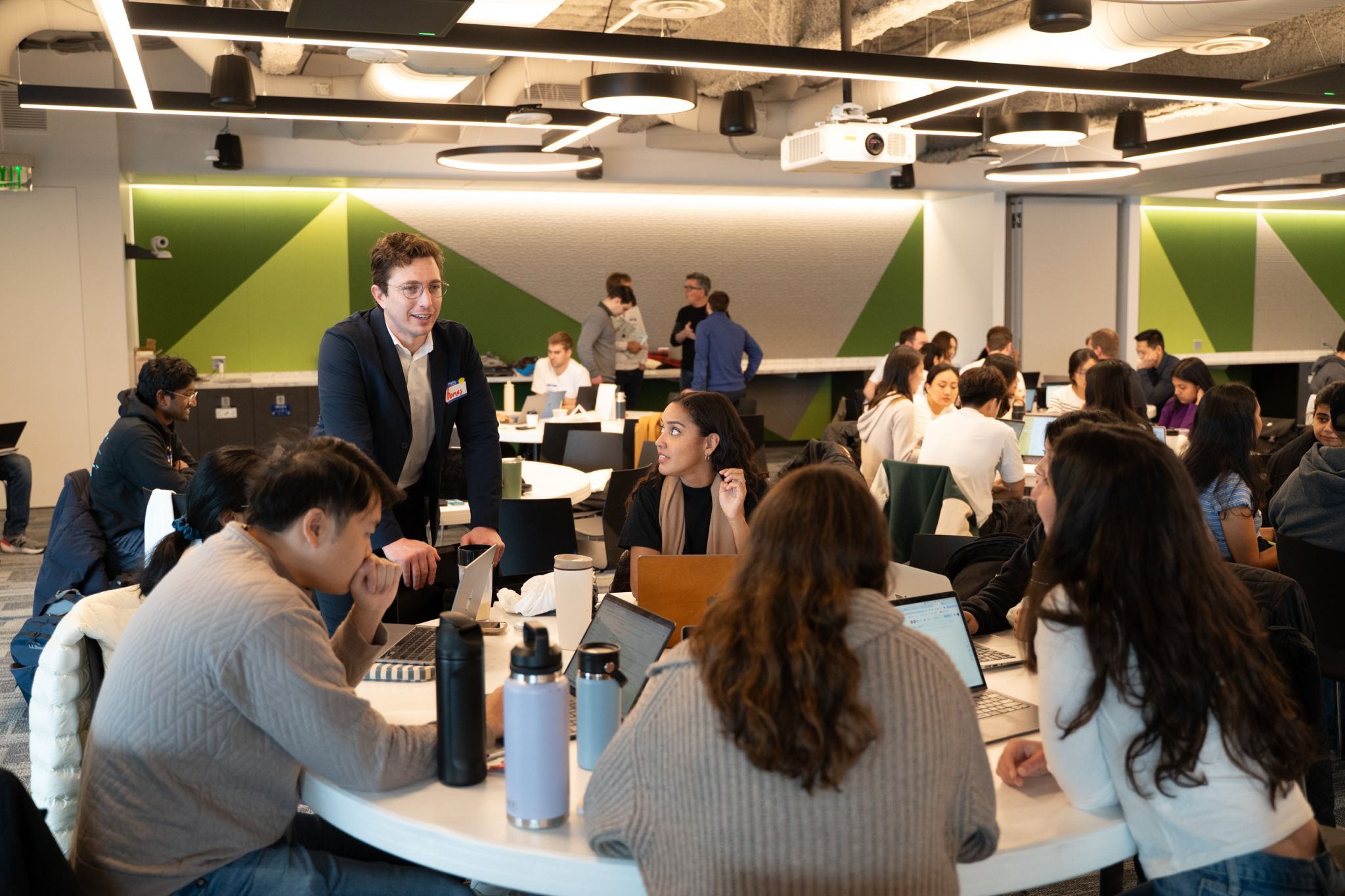
The best teams enter the cohort and receive $150K, credits, dedicated mentors, VC introductions, and a slot at Demo Day. TNT will typically be their first institutional check.
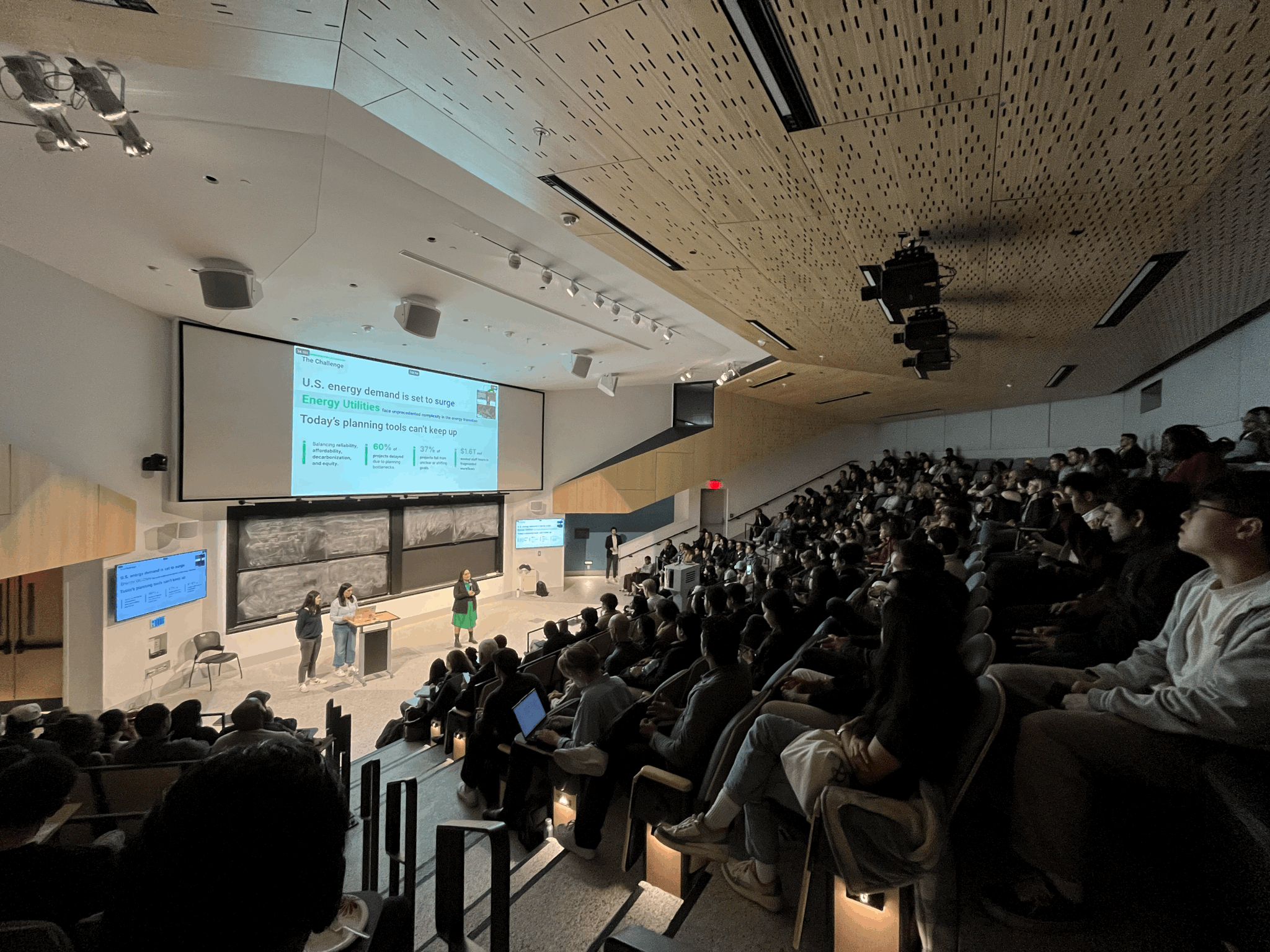
Screening combines AI-assisted scoring with human judgment. Every applicant is scored against team strength, market fit, technical depth, and execution signals. Rob runs final selection with reference backchanneling where possible, supported by fellows embedded across CSAIL, HBS, iLab, Sloan, and SEAS. Three cohorts of selection experience.
The Accelerator
A structure where MIT and Harvard founders get real capital from day one, real support across the build, and where 12-18 months of insider conviction converts into a contractual allocation at Series A.
Uncapped MFN SAFE the day a team is admitted. Real capital so founders can build instead of pausing to fundraise.
No separate term-setting. No selective acceptance. The decision to admit is the decision to invest.
Credits across Anthropic, Google Cloud, AWS, NVIDIA, Cloudflare and 25+ partners. Dedicated mentor pairing. Legal counsel through Orrick. Brokered VC intros and enterprise pilots.
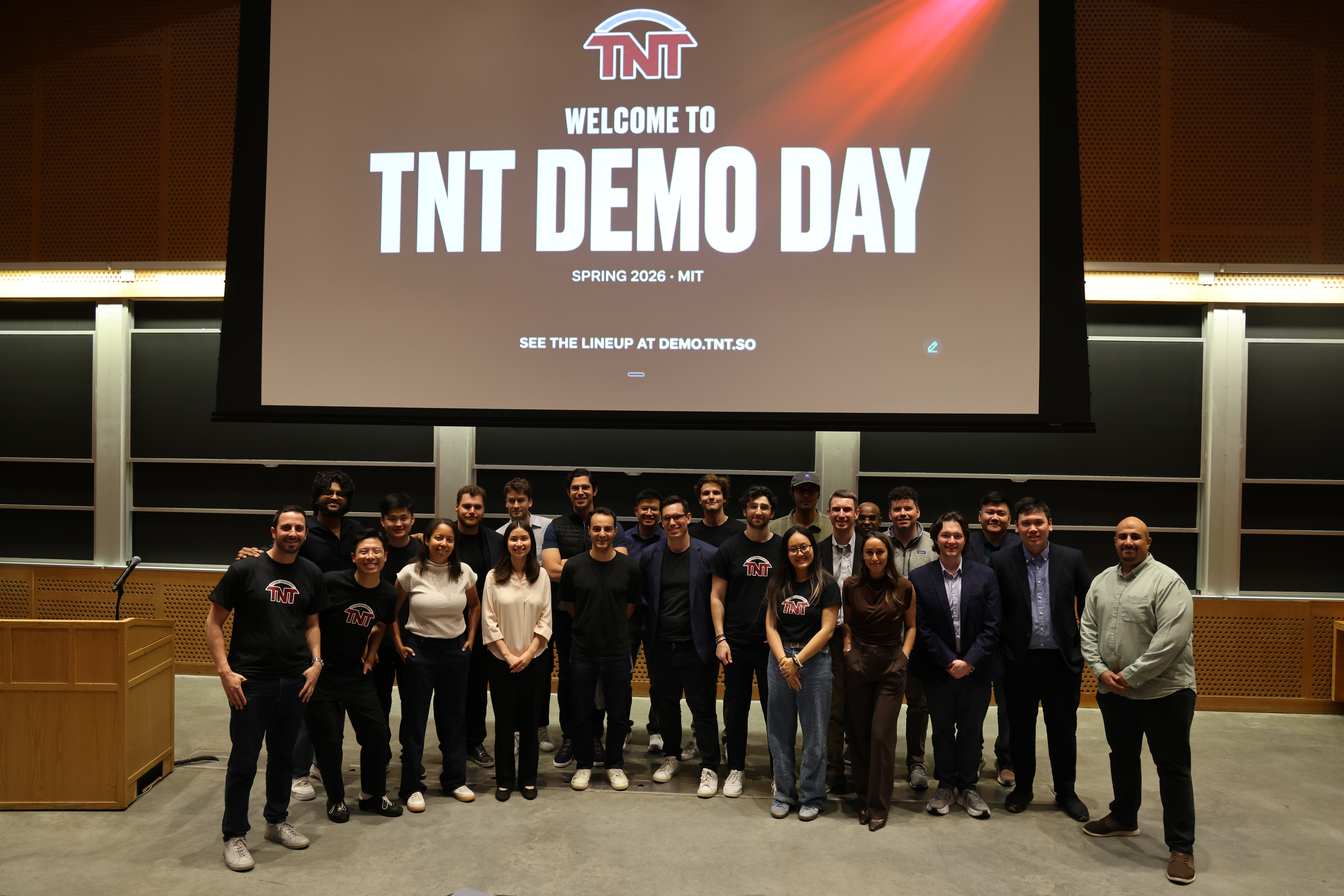
We work alongside the team through hiring, first revenue, pilots, seed round, and Demo Day in front of 300+.

When a top-tier VC leads the Series A, the TNT Agreement gives us a contractual right to 2% at the same terms as the lead. Backed by 12-18 months of seeing them build.
Contractual, not discretionary. Survives competitive rounds where late entrants get displaced. SPV overflow for LPs at 0% management fee, 20% carry.

“TNT connected us to the community in a way that changed our business. We raised our first round through VC introductions from the program, and we’re now hiring out of MIT and Harvard.”
Trevor Keith · CEO, Solid · $6M raised
Track Record
TNT has run three cohorts since January 2025. Portfolio companies have raised $50M+ across pre-seed and seed rounds, all before we had a fund. Fund I puts capital behind the pipeline we've already proven.

AI-powered full-stack app builder for entrepreneurs and agencies

AI agents that never lose context, born out of MIT CSAIL research
AI-native engineering services holding company
Building the most power-dense energy system
AI back-office for industrials and manufacturing
Quantum cameras for earth and space intelligence

Off-grid housing on demand, deployable in minutes
AI infrastructure born out of leading research at MIT CSAIL
Representative selection. Does not include all cohort companies. Cohorts are composed of PhD, undergraduate, and MBA founding teams.
Team
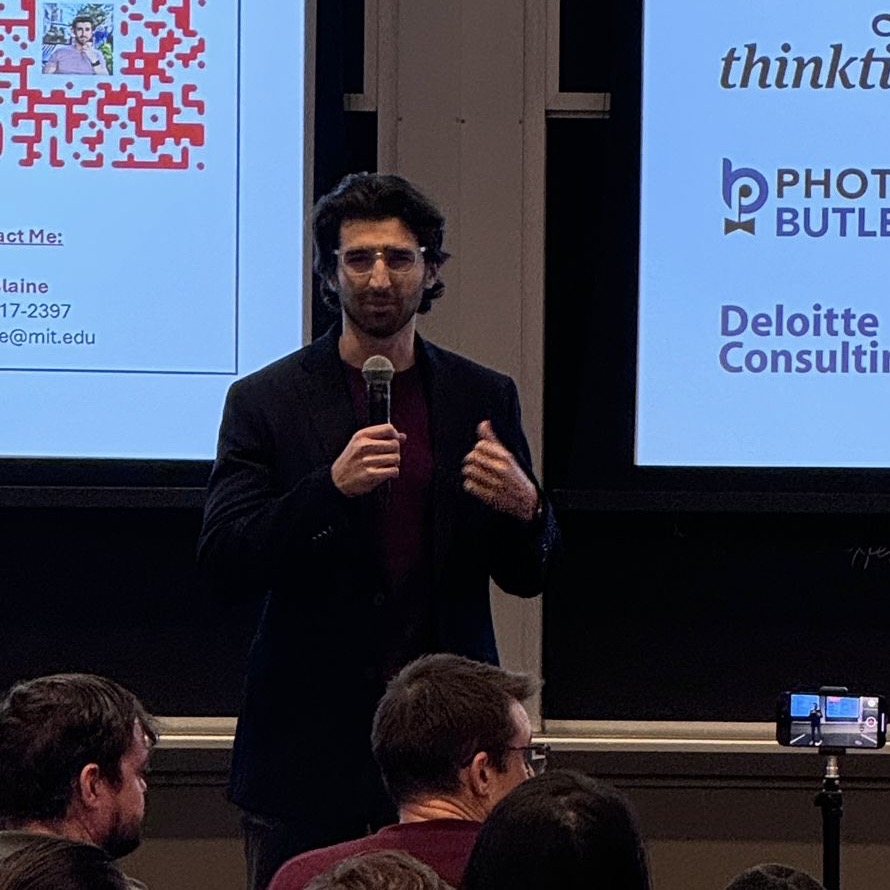
Founder & General Partner
Selected and supported 45+ MIT and Harvard startups across 3 cohorts, building relationships with founders months before they raise. Portfolio companies have collectively raised $50M+. Built the sourcing infrastructure from inside both campuses with direct relationships across CSAIL, the Trust Center, i-Lab, and key student organizations. Previously helped B2B tech companies with AI, product, and GTM strategy at Thinktiv. Started in consulting at Deloitte.
Will be promoted from our current TNT Fellows. Leads day-to-day cohort operations, on-campus sourcing, and founder support. Embedded on campus with deep MIT/Harvard ties.
Current MIT and Harvard students who run events, manage community, and surface founders from every lab, club, and classroom. The pipeline renews every year.
Series A follow-on decisions are made by the TNT Investment Committee, with Rob as Managing Partner joined by venture partners drawn from the TNT advisory network.
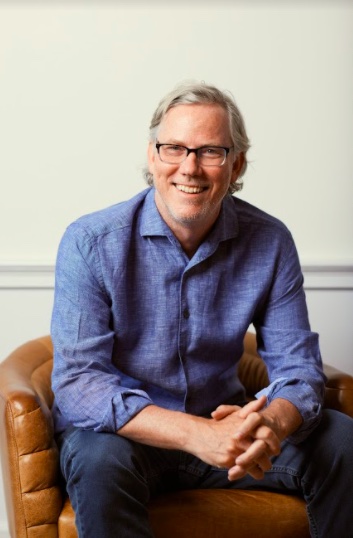
Co-founder & Chairman, HubSpot
Sequoia / MIT Sloan Faculty
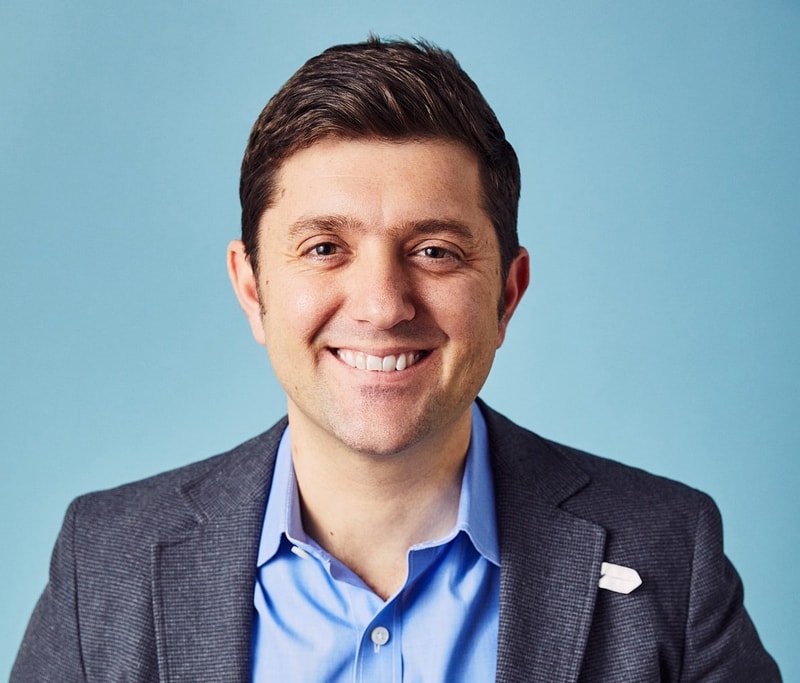
CEO, Ginkgo Bioworks
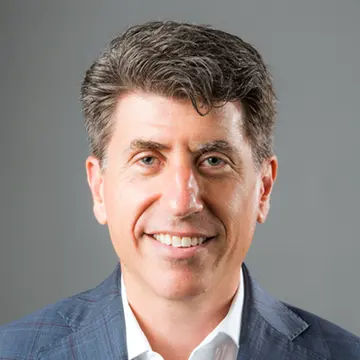
Managing Partner, Tectonic Ventures
MIT Sloan Faculty
Additional operators and investors being added in 2026.
Timing
City, state, and private capital are converging on Boston. Top-tier VCs are increasing their Boston presence. More attention validates the ecosystem, but none of them are embedded where the deals originate. TNT is already there, with nearly 200 applications per cohort and $50M+ raised across 3 cohorts.
Three cohorts, $50M+ raised by cohort companies, and a proven selection process, all before we had a fund. Fund I puts capital behind the pipeline we've already built.
MIT and Harvard produced Cursor ($50B), Suno ($5B+), Etched ($5B), and Liquid AI ($2.7B) in the last three years. Several teams in our current cohort are building toward similar trajectories.
MIT and Harvard founders need community, capital, and mentorship while they're building. TNT delivers that layer during their time on campus, so they're connected, capitalized, and ready for whatever they choose next.
When anyone can build software, the advantage shifts to teams with proprietary research, deep domain expertise, and technical moats. MIT and Harvard have the deepest concentration of that talent in the world.
The Fund
Every company receives $150K via uncapped MFN SAFE at admission. TNT supports them through mentors, credits, VC introductions, and Demo Day. When they raise their Series A, the TNT Agreement gives us the contractual right to invest in 2% at the same terms as the lead. The right expires at the close of that round.
Why it matters: TNT builds conviction in companies for 12-18 months before Sequoia or a16z arrives at Series A. Our 2% allocation is contractual and survives competitive rounds where later entrants get displaced.
$15M enters 100 companies at pre-seed via MFN SAFE. $10M follows on into the top five at Series A based on 12-18 months of seeing them build. Remaining Series A rights are exercised via SPV at 0% management fee with 20% carry, giving Fund I LPs priority access to co-invest in every deal.
One fund, one return number. Fund I's return projection includes only direct Series A follow-ons from the $10M reserve. SPV co-investment access for Fund I LPs sits on top of that as additional upside.
Series A FO decisions are made by the TNT Investment Committee, with Rob as Managing Partner joined by venture partners drawn from TNT’s advisory network of operators, founders, and investors. Conviction on the 5 follow-on bets is informed by multiple operator perspectives rather than solely the GP’s judgment.
The Barbell Strategy
Think of the $150K MFN SAFE as a call option. We invest at pre-seed to build the relationship and provide real value through mentors, credits, and VC introductions. At Series A, the 2% right exercises at the lead's terms, giving us a contractual allocation rather than a discretionary one.
| Stage | We Invest | Dilution | Our Ownership | Position Value |
|---|---|---|---|---|
| Pre-seed (MFN) | $150K | -- | SAFE | $150K |
| MFN converts at pre-seed ($15M post) | -- | -- | ~1.00% | $150K |
| After Seed round | -- | ~15% | ~0.85% | ~$150K |
| Series A + 2% right ($100M post) | ~$2M | ~18% | ~2.70% | ~$2.70M |
| After Series B + C | -- | ~26% cumulative | ~2.00% | -- |
| $500M Exit | -- | -- | ~2.00% | $10.0M |
| $1B Exit | -- | -- | ~2.00% | $20.0M |
| $5B Exit | -- | +Series D ~7% | ~1.86% | $93.0M |
| $10B Exit | -- | +Series D+E ~11.5% | ~1.77% | $177.0M |
Illustrative example. $150K MFN converting at $15M median pre-seed valuation (TNT cohort observed), ~$2M follow-on (2% at $100M post Series A). Pre-seed to seed dilution ~15% (TNT observed). A ~18%, B ~13%, C ~15%, D ~7% from Carta Q1 2026 / 2025 in Review medians. Series E ~5% hot-round comps (Anthropic E 3.3%, Perplexity 5.6%). Shows financing dilution only; ESOP refresh (~2.5% per round) treated as sensitivity in expected MOIC range.
Fund Returns
These 5 companies are a subset of the MFN portfolio below. This table shows the additional return from the 2% right (1.50% at exit after dilution). MFN returns on these same companies are already included in the MFN table.
| Scenario | Total | Fail | Small Exit $10-50M | Moderate $50-200M | Solid $200-500M | Breakout $500M-1B | Unicorn $1B | Decacorn $10B | Return |
|---|---|---|---|---|---|---|---|---|---|
| Stress | 5 | 2 | - | 1 | 1 | 1 | 0 | 0 | $17.2M |
| Base | 5 | 1 | - | 1 | 1 | 1 | 1 | 0 | $32.2M |
| Target | 5 | 0 | - | 1 | 1 | 1 | 2 | 0 | $47.1M |
| Upside | 5 | 0 | - | 1 | 1 | 1 | 1 | 1 | $166.8M |
MFN converts at ~$15M median. Includes the 5 FO companies (their MFN returns). FO table above adds the additional 1.50% ownership layer on those 5.
| Scenario | Total | Fail | Small Exit $10-25M | Moderate $50-200M | Solid $200-500M | Breakout $500M-1B | Unicorn $1B | Decacorn $10B | Return |
|---|---|---|---|---|---|---|---|---|---|
| Stress | 100 | 57 | 20 | 14 | 7 | 1 | 1 | 0 | $28.9M |
| Base | 100 | 55 | 15 | 17 | 8 | 3 | 2 | 0 | $44.7M |
| Target | 100 | 52 | 11 | 18 | 12 | 4 | 3 | 0 | $60.3M |
| Upside | 100 | 45 | 11 | 17 | 16 | 7 | 3 | 1 | $124.7M |
SPV co-invest: Fund exercises 2% on 5 companies directly. Remaining Series A rights are exercised via SPV (0% management fee, 20% carry) or reserved for Fund II. Fund I LPs get priority on all SPVs. Returns above exclude SPV upside.
Single-vehicle option: Fund returns are independent of SPV participation. SPV co-invest is per-deal, opt-in, and exclusive to Fund I LPs.
Scenario cards above use Carta Q1 2026 / 2025 in Review dilution medians (~3.6x expected). Expected MOIC range reflects ESOP refresh sensitivity: lower bound ~3.0x assumes 2.5% ESOP refresh applied uniformly across all rounds; upper bound ~3.6x reflects financing dilution only (per Carta data). Midpoint ~3.3x. MFN converts at ~$15M median pre-seed. FO at 2% of ~$100M avg Series A post-money. Financing dilution: pre-seed to seed ~15% (TNT observed), A ~18%, B ~13%, C ~15%, D ~7% (Carta Q1 2026 / 2025 in Review medians), E ~5% (hot-round comps: Anthropic E 3.3%, Perplexity 5.6%). Weights: 10% stress, 40% base, 40% target, 10% upside. Gross of fees and carry. Exit rates: ~1.5-2x MIT/Harvard outperformance over Carta base rates. Returns reflect midpoint FO selection (12-18 months of seeing them build).
The Vision
Fund I proves the model. The brand, pipeline, and track record compound over time. Fund I LPs get priority access to future funds and SPVs.

The Ask
TNT Fund I
Minimum LP commitment: $200K (waivable by GP) • Target close: Q3 2026
Confidential. For qualified investors only. Past performance does not guarantee future results.
Important Notices
No assurance can be given that the Fund's investment objective will be achieved or that investors will receive a return of any of their capital. In particular, the risks of investing in the Fund may include the following:
This is not intended to be a complete description of the risks of investing in the Fund. Investors should rely on their own examination of the potential risks and rewards. The Offering Documents will discuss these and other important risk factors and considerations that should be carefully evaluated before making an investment in the Fund.
Unlike a mutual fund, the Fund will not be registered as an investment company under the Investment Company Act of 1940, as amended (the "Investment Company Act"). Consequently, investors will not be afforded the protections of the Investment Company Act.
No person has been authorized in connection with this offering to give any information or to make any representations other than as contained in this Presentation and, if given or made, such information or representation must not be relied upon as having been authorized by the Fund, the Manager or the Manager's affiliates. Statements in this Presentation are made as of the date hereof unless stated otherwise herein, and neither the delivery of this Presentation at any time, nor any sale hereunder, shall under any circumstances create an implication that the information contained herein is correct as of any time subsequent to such date.
Certain information contained herein concerning economic trends and performance is based on or derived from information provided by independent third party sources. The Manager believes that such information is accurate and that the sources from which it has been obtained are reliable. The Manager cannot guarantee the accuracy of such information, however, and has not independently verified the assumptions on which such information is based. The Manager does not undertake to update this information, which is subject to change.
In considering the prior performance information contained herein, prospective investors should bear in mind that past performance is not a guarantee, projection or prediction and it is not necessarily indicative of future results. There can be no assurance that the Fund will achieve comparable results or that the Fund will be able to implement its investment strategy or achieve its investment objective.
Gross performance calculations do not reflect the deduction of management fees, carried interest and Fund expenses (including, without limitation, taxes, broken deal expenses, transaction costs, and other expenses of Fund I or portfolio companies), which substantially reduce returns to investors.
Unrealized values and other related financial information regarding certain investments are based on unaudited, preliminary estimates and valuations.
Certain statements contained in this document, including without limitation, statements containing the words "believes," "anticipates," "intends," "expects," and words of similar import constitute "forward looking statements." Additionally, any forecasts and estimates provided herein are forward looking statements. Such statements and other forward looking statements are based on available information and the views of the Manager as of the date hereof. Accordingly, such statements are inherently speculative as they are based on assumptions that may involve known and unknown risks and uncertainties. Actual results and events may differ materially from those in any forward looking statements. Further, any opinions expressed are the current opinions of the Manager only and may be subject to change, without notice. There is no undertaking to update any of the information in this document.
References to "$" or "dollars" are to United States dollars unless the context indicates otherwise.
Appendix 1
1/3 of the fund ($10M) follows on into the top five at Series A. The 2% right via TNT Agreement is contractual, not discretionary, but exercising it is. The selection edge comes from 12-18 months of seeing them build: we have real data on revenue, hiring, founder execution, and customer wins before we commit. We see who is actually shipping versus who pitches well. Follow-on decisions will be made by the TNT Investment Committee we are building (Rob as Managing Partner plus venture partners from the advisory network), not a single GP gut call. We follow when a top firm leads the round, so we are stacking conviction with the best Series A investors in the market.
The cohort model does the heavy lifting. Companies support each other. Our programming (mentors, Demo Day, build nights) scales across the cohort. We're building a community where founders learn from each other and from the best operators in our network. The best accelerators (YC, Techstars) prove this model works at scale.
These two schools are the core of our community and where we have the deepest network. Concentration is the strategy: owning this niche completely is more valuable than spreading thin across 20 schools. We keep flexibility for exceptional teams that come through our network from outside MIT and Harvard. The school filter is how we source, with room to back the right founders wherever they originate. Expansion beyond these two campuses is a Fund II conversation once the brand is proven.
IP ownership is diligenced before the $150K MFN. The TLOs at MIT (Technology Licensing Office) and Harvard (Office of Technology Development) only own IP developed substantially with university resources: federal grants, lab equipment, faculty involvement. Undergrad and MBA founders building independent of lab work have no university claim. For PhD spinouts with real TLO IP, the standard path is an option-and-license agreement, typically settling at low single-digit university equity plus modest royalties. We work directly with both TLOs and route founders through Orrick, our legal partner, to navigate licensing. We do not fund companies with unresolved TLO claims.
Our top referral channels are word of mouth from alumni and people who have attended our events. We continue running community events (firesides, hackathons, build nights) that generate top-of-funnel deal flow year-round. We track emerging teams as they participate in these events, and our campus fellows program across MIT and Harvard ensures on-the-ground presence every semester. The fund operates independently of any university affiliation.
Emerging managers consistently outperform established funds in pre-seed and seed. Smaller fund size means discipline. Proprietary access means better entry prices. And Fund I economics are the best LPs will ever get from this team.
Appendix 2
| Use | Amount | % |
|---|---|---|
| Pre-seed MFN (100 x $150K) | $15,000,000 | 50.0% |
| Series A follow-on reserve | $10,000,000 | 33.3% |
| Management fees + fund expenses | $4,400,000 | 14.7% |
| Operating reserve | $600,000 | 2.0% |
| Total | $30,000,000 | 100% |
Appendix 3
$150K MFN SAFE at pre-seed for early visibility. 2% at Series A via TNT Agreement for later-stage conviction. Our terms stack with every other investor.
Appendix 4
Ownership % drops through funding rounds, but stake value only goes up. Smaller slice of a much bigger pie.
| Stage | Round | Pre-Money | Dilution | Ownership | Stake Value |
|---|---|---|---|---|---|
| TNT MFN SAFE | $150K | -- | -- | SAFE | $150K |
| MFN converts at pre-seed | $2M | $15M | -- | ~1.00% | $150K |
| Seed round | $3.5M | $25M | ~15% | ~0.85% | ~$150K |
| Series A + 2% right | $18M | $82M | ~18% | ~2.70% | $150K + ~$2M |
| Series B | $40M | $270M | ~13% | ~2.35% | ~$7.3M |
| Series C | $100M | $570M | ~15% | ~2.00% | ~$13.4M |
| Series D | $200M | $2.66B | ~7% | ~1.86% | ~$53M |
| Series E | $250M | $4.75B | ~5% | ~1.77% | ~$89M |
| $10B+ Exit | -- | $10B+ | -- | ~1.77% | $177M+ |
Ownership %
Stake Value
TNT invests via uncapped MFN SAFE ($150K). Converts at next priced round. 2% additional purchased at Series A terms via TNT Agreement. Financing dilution per round: pre-seed to seed ~15% (TNT observed); A ~18%, B ~13%, C ~15%, D ~7% (Carta Q1 2026 / 2025 in Review medians); E ~5% (hot-round comps: Anthropic E 3.3%, Perplexity 5.6%). Table shows financing dilution only; ESOP refresh (~2.5% per round) treated as sensitivity in expected MOIC range. $10B+ exit illustrative; smaller exits (e.g., $1B at end of Series C = ~$20M, $5B post-D = ~$93M) detailed on the Barbell Strategy slide.
Appendix 5
| Year 1 | Year 2 | Year 3 | Year 4 | Year 5 | Total | |
|---|---|---|---|---|---|---|
| Cohorts | 2 | 2 | 1 | -- | -- | 5 cohorts |
| Companies (pre-seed) | 40 | 40 | 20 | -- | -- | 100 |
| Pre-seed deployed | $6M | $6M | $3M | -- | -- | $15M |
| Series A follow-on | -- | $2M | $4M | $4M | -- | $10M |
| Fees + expenses | -- | -- | -- | -- | -- | ~$4.4M |
| Cumulative deployed | $6M | $12M | $19M | $25M | $28M | $30M |
2% on committed capital during investment period (yrs 1-3), lower rate on invested capital post-investment (yrs 4-10). ~$4.4M total fees over 10-year fund life. Capital calls match deployment.
Follow-on reserve funds the 2% Series A bets (~5 companies x ~$2M). Capital calls match deployment so LPs are not paying fees on idle capital. For Series A rounds that exceed per-company reserve allocation, Fund I LPs have priority access to co-invest via SPV.
20 companies per cohort. Actual sizes may vary depending on the quality and volume of applications. Our current cohort is 20 companies. We invest in quality over quantity. Series A check sizes vary with valuation. At higher valuations ($120M+ pre), overflow allocation is offered to Fund I LPs via SPV.
Appendix 6
| Fund size | $30M |
| MFN deployment | $15M into 100 companies ($150K each) |
| Follow-on reserve | $10M into ~5 companies (~$2M each) |
| Management fees | ~$4.4M (2% on committed, stepping down) |
| MFN conversion | ~$15M median seed valuation |
| Series A post-money | ~$100M average |
| MFN ownership at exit | ~0.52% (after seed, A, B, C financing dilution) |
| Follow-on ownership at exit | ~1.5% (after financing dilution) |
| Combined ownership at exit | ~2.00% |
| Deployment period | 2.5 years (5 cohorts) |
| Seed valuation median | $15M post-money (TNT cohort observed) |
| Pre-seed to seed dilution | ~15% (TNT cohort observed) |
| Series A dilution | ~18% (Carta Q1 2026) |
| Series B dilution | ~13% (Carta 2025 in Review) |
| Series C dilution | ~15% (Carta 2025 in Review) |
| Series D dilution | ~7% (Carta 2025 in Review; Suno 7.4%) |
| Series E dilution | ~5% (hot-round comps; Anthropic 3.3%, Perplexity 5.6%) |
| ESOP refresh per round | ~2.5% (sensitivity; defines lower bound of MOIC range) |
| Unicorn rate | ~2% for MIT/Harvard (est. 1.5-2x industry base rate) |
| MIT/Harvard outperformance | ~1.5-2x industry base rates (est.) |
| Carry | 20% above 1x preferred return |
| Probability weights | 10/40/40/10 (S/B/T/U) |
Exit tier rates assume 1.5-2x outperformance over industry base rates, consistent with estimated MIT/Harvard outperformance (1.5-2x industry base rates) and the fund's 2-year insider screening advantage on follow-on investments. All returns on the main returns slide are shown gross of fees and carry.
Real conversations in small rooms with world-class founders and operators. Past and upcoming speakers include CEOs of Formlabs, Liquid AI, Boston Dynamics, Delve, and more.
We host hands-on building events where we see founders in action. This is where we spot technical talent and watch teams form in real time.
Current MIT and Harvard students serve on the TNT team. They're our eyes and ears on campus, connected to every lab, club, and dorm room where the next great company might be forming. This is structural, not networking.
We help technical founders find business co-founders and vice versa.
Applications are screened using TNT OS, our proprietary AI-powered evaluation platform. We score across four dimensions: Team, Thesis Fit, Idea Quality, and Execution Readiness. Final decisions are made by the GP after deep-dive interviews.
AI infrastructure, vertical AI for regulated industries, deep tech with real IP. We run every application through a defensibility filter: can a frontier model replicate this in 12 months? If yes, we pass. We want companies with proprietary data, domain expertise, or technical moats.
Teams get speakers, investor prep, investor intros, dedicated mentors, and build nights. Plus $1M+ in partner credits (Anthropic, Google Cloud, AWS, NVIDIA). The program builds toward Demo Day in front of 300+ attendees during Boston Tech Week.
TNT alumni stay in the network. We continue making VC intros, helping with follow-on raises, and connecting teams with each other. The cohort is a lifetime network.
MIT and Harvard rank #2 and #3 globally for producing unicorn founders (behind only Stanford). Together they've produced the founders of HubSpot, Cloudflare, Dropbox, Akamai, Cursor, and dozens more billion-dollar companies. The density of technical talent, research labs, and entrepreneurial culture is unmatched on the East Coast.
Both campuses sit within a mile of each other in Cambridge, MA. This proximity creates a unique cross-pollination of ideas, co-founder matching, and shared resources that no other university pairing can replicate.
Others have tried to build around this ecosystem, but no one has combined community, accelerator, and fund into a single integrated model the way TNT has. YC and other accelerators draw from a global pool. TNT is purpose-built for this niche.
The picks-and-shovels layer. Companies building the tooling, data pipelines, and agent frameworks that every AI application depends on. These moats can come from years of deep research or from scrappy teams who move fast enough to own a critical layer before anyone else. Either way, the result is network effects and switching costs that grow over time.
Healthcare, defense, finance, government, manufacturing. Industries where domain expertise, compliance requirements, and data access create natural barriers to entry. A general-purpose AI can't walk into a hospital or onto a factory floor.
Quantum sensing, nuclear energy, novel materials. Companies where years of PhD research create defensible intellectual property. These are hard to start, hard to replicate, and exactly what MIT and Harvard labs produce.
$150K uncapped MFN SAFE. Converts at the next priced round. Plus the TNT Agreement: right to invest in 2% of the company at Series A terms (use it or lose it). Same deal for every company. We get early visibility. They get the best pre-seed deal available.
Our MFN converts at whatever terms the next investor sets. The 2% at Series A is at the same price the lead investor pays. Founders who do TNT + YC keep the MFN and the 2% right stacks on top. Our terms are designed to be compatible with every other investor. We invest early to build the relationship and get visibility into who's winning.
We invest via uncapped MFN SAFE with no valuation set. Our terms are compatible with every other investor. The program helps companies raise their next round. The TNT Agreement gives us the right to invest in 2% at Series A - our follow-on is contractual, not competitive. 100 companies means 100 call options. We exercise on the best 5 when a strong lead validates the company.
TNT Fellows are current MIT and Harvard students embedded across campus. They're in the labs, the dorms, the study groups where the next great company might be forming. This gives us structural visibility into founding teams months before they start fundraising.
Most VCs meet founders at the pitch stage. We meet them at the idea stage. Our fireside chats, hackathons, and build nights let us watch founders work before they ever apply. By the time they're ready to raise, we already know who they are.
We run events, connect founders, make intros, and provide resources long before we ever invest. This builds a reputation that no cold outreach or brand marketing can replicate. When founders are ready to raise, TNT is already on their shortlist.
Every founder who goes through TNT becomes part of a permanent network. Alumni refer new applicants, mentor current cohorts, and collaborate on projects. This creates a self-reinforcing cycle of trust that compounds over time.
nearly 200 applications for our Spring 2026 cohort with zero paid marketing. Every applicant found us through the community, a friend in a previous cohort, or an event they attended. This is the highest-quality deal flow you can get: warm, pre-filtered, and self-selecting.
Each cohort strengthens the brand. Alumni tell their friends. Fireside chat attendees become applicants. The more founders we help, the more founders want in. This is a compounding advantage that gets stronger every semester.
AI-powered evaluation that scores every application across multiple dimensions: team strength, thesis fit, idea quality, and execution readiness. This lets us process nearly 200 applications with consistency and speed while surfacing the strongest candidates for GP review.
Automated matching between cohort companies and our mentor network based on industry, stage, and specific needs. The right mentor at the right time can change a company's trajectory.
Real-time dashboards for fundraising progress, KPIs, and milestones across the entire portfolio. Gives LPs transparency and helps the team identify which companies need attention.
Solid generates production-ready, full-stack web applications using React, Node.js, TypeScript, and Postgres, outputting clean, readable code rather than throwaway prototypes. Unlike many AI code tools, Solid produces maintainable codebases that developers can extend, deploy anywhere, and hand off to engineering teams. Well-suited for agencies prototyping for clients and founders shipping MVPs fast.
Subconscious is building infrastructure for deploying and scaling AI agents, distinguished by its co-design of model and runtime. Rather than layering orchestration on top of third-party LLM APIs, the team built a custom inference engine that handles task decomposition, tool use, and long-horizon reasoning natively. The technology emerged from MIT research and addresses core agent failure modes like brittle multi-step workflows and context window limitations.
Diffraqtion develops quantum camera systems that use photon-counting sensors and proprietary AI algorithms to extract significantly more information from incoming light than standard sensors, enabling dramatically higher resolution and faster processing than conventional optical surveillance. DARPA awarded the company a Direct-to-Phase II SBIR contract, and they are working with the Space Force's Space Domain Awareness Lab. Plans to launch their first satellite (Galileo-1) in 2028.
Cortex acquires and transforms engineering R&D services firms by deploying AI-powered knowledge capture and workflow automation across their operations, targeting sectors like autonomous vehicles, aerospace, and semiconductors where engineers repeatedly recreate complex work manually. Founded at Harvard Business School, the thesis is that configurations and processes that historically took weeks can be reduced to minutes, making each project accelerate the next.
Apollo Atomics is developing compact nuclear reactor technology backed by 15 years of research at MIT, designed to be significantly smaller than traditional pressurized water reactors while targeting electricity costs as low as 3 cents/kWh through higher power density, passive safety, and reduced plant complexity. Founded in 2024 and headquartered in Cambridge, MA, the company is backed by Y Combinator.
Uplift Microhome builds fully livable, completely off-grid micro-homes that can be deployed in minutes. Winner of the MIT $100K Accelerate competition, the company is targeting housing shortages, disaster relief, and remote deployment use cases with a hardware-first approach to housing on demand. Founded by Charlie Nitschelm (MIT) and Trevor O'Leary (HBS MBA '27).
Zaqa automates repetitive back-office tasks for medium-sized manufacturing and distribution businesses, processing purchase orders in seconds versus minutes in legacy ERP systems like SAP. Founded out of Harvard Business School, the company emphasizes seamless integration with existing software to avoid painful multi-year migrations. Backed by Flybridge, IM Ventures, and Meridian.

ZeroClaw Labs is building a premium, privacy-first AI agent platform that lets enterprises deploy autonomous agents entirely on their own infrastructure. Founded by a Harvard team, ZeroClaw sits at the intersection of two massive trends: enterprise AI adoption and data sovereignty requirements. As every company races to deploy AI agents, the ones in regulated industries and security-conscious environments need a solution where nothing leaves their walls. ZeroClaw is that solution.
Rob founded TNT at MIT Sloan and built it into the largest founder community across MIT and Harvard, entirely bootstrapped. Over 3 cohorts, TNT cohort companies have collectively raised $50M+, with sponsors including JPMorgan, Anthropic, Google, NVIDIA, and AWS.
Before MIT, Rob was Director of Strategy & Innovation at Thinktiv, where he led AI strategy, product strategy, and GTM design for B2B SaaS and PE-backed companies. Prior to that, he was a consultant at Deloitte, specializing in financial modeling, systems design, and research for federal and financial services clients.
Rob holds an MBA from MIT Sloan (Class of 2026), an MA in International Business, and a BS in Finance from the University of Florida.
$1M+ in credits and growing across 25+ partners. We hustle to get our founders the tools, infrastructure, and services they need to build fast.
Custom-matched 2-3 per company based on sector, stage, and founder needs. Each pairing is intentional. Examples of current mentors:
Showing 9 of 100+ mentors. Full roster available on request.